
ESP-Disk'
The artists alone decide what you will hear.
ESP-Disk' is a New York–based record company and label founded in 1963 by lawyer Bernard Stollman. Originally created to release Esperanto-based music, it became the most important exponent of free jazz after its second release, Albert Ayler's Spiritual Unity. The label also issued recordings by uncommercial underground rock acts, and its motto is 'The artists alone decide what you will hear.'
- founded
- 1963
- founder
- Bernard Stollman
- field
- Record label
- nationality
- American (New York–based)
- known_for
- Free jazz and underground rock releases
Lore & Background
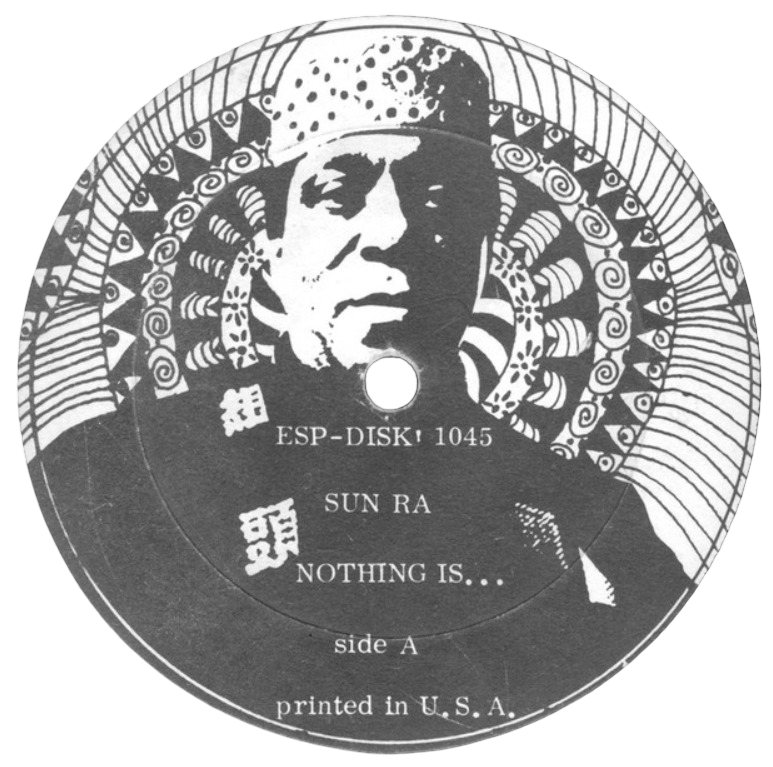
ESP-Disk' was founded in 1963 by lawyer Bernard Stollman. Though it originally existed to release Esperanto-based music, beginning with its second release (Albert Ayler's Spiritual Unity), ESP became the most important exponent of what is commonly referred to as free jazz. Early releases included albums by Paul Bley, Pharoah Sanders and Sun Ra. ESP also released recordings by uncommercial underground rock acts including the Fugs, The Godz and Pearls Before Swine.
Bernard Stollman faced allegations of not paying royalties to the artists that were signed to ESP-Disk'. Tom Rapp of the band Pearls Before Swine claimed that: 'We never got any money from ESP. Never, not even like a hundred dollars or something. My real sense is that he [Stollman] was abducted by aliens, and when he was probed it erased his memory of where all the money was'. Peter Stampfel of the bands Holy Modal Rounders and The Fugs claimed that Stollman told him that 'the contract says that all rights belong to me. You have no royalties ever, ever, ever. The publishing is mine. You don't own the songs anymore. We don't owe you anything'. Members of The Fugs have also stated claims that they received an unfavourable record contract. Ed Sanders said that 'our royalty rate was less than 3%, one of the lower percentages in the history of western civilization'. 801 Magazine, which featured an interview with Stollman in 2008, said that Stollman claimed that 'he paid all the recording costs and gave the musicians small advances', and that 'he never made any money from the music'.
Reader's Guide
ESP-Disk' holds a significant place in the history of recorded music as a pioneering label for free jazz and uncommercial underground rock. Its early releases by Albert Ayler, Paul Bley, Pharoah Sanders, and Sun Ra helped define the free jazz movement. The label's motto, 'The artists alone decide what you will hear,' reflected a hands-off artistic philosophy. However, its legacy is complicated by persistent allegations that founder Bernard Stollman failed to pay royalties to artists. Multiple musicians, including Tom Rapp of Pearls Before Swine, Peter Stampfel of Holy Modal Rounders and The Fugs, and Ed Sanders of The Fugs, have publicly stated that they received little or no money from the label. Stollman, in a 2008 interview, claimed he paid recording costs and gave small advances but never made money from the music. The dispute remains unresolved, making ESP-Disk' both a celebrated and controversial institution in independent music.
Did You Know?
- ESP-Disk' was founded in 1963 by lawyer Bernard Stollman.
- Its second release was Albert Ayler's Spiritual Unity, which made the label a key exponent of free jazz.
- The label's motto is 'The artists alone decide what you will hear.'
- Tom Rapp of Pearls Before Swine claimed he never received any money from ESP-Disk'.
Origins and Founding Vision
ESP-Disk' was established in 1963 in New York by Bernard Stollman, a lawyer by profession. The label's initial purpose was modest and specific: to put out recordings rooted in the Esperanto language. However, that narrow focus quickly gave way to something far broader and more radical. Stollman's guiding principle, captured in the label's motto—'The artists alone decide what you will hear'—reflected a commitment to creative autonomy that would define ESP's identity for decades. Rather than curating a particular sound, Stollman positioned the company as a vehicle for artists to express themselves without commercial compromise. This philosophy, combined with the label's New York base during a period of extraordinary musical ferment, set the stage for ESP-Disk' to become one of the most consequential independent imprints in modern music history.
Building the Free Jazz Canon
From its very second release—Albert Ayler's Spiritual Unity—ESP-Disk' pivoted decisively toward what the world would come to call free jazz, and it quickly became the genre's most vital institutional home. The catalog gathered a constellation of boundary-pushing musicians: Paul Bley's exploratory piano work, Pharoah Sanders's spiritual saxophone, and Sun Ra's cosmic compositions all found a permanent home on the label. But ESP's reach extended well beyond the jazz world. The label also championed uncommercial underground rock acts, issuing records by The Fugs, The Godz, and Pearls Before Swine. This unusual pairing of avant-garde jazz and experimental rock underscored Stollman's refusal to draw genre boundaries. In an era when major labels were consolidating around pop and mainstream jazz, ESP-Disk' offered a counter-program that treated sonic experimentation as its only criterion, making it the most important exponent of free jazz and a crucial archive for American experimental music.
The Royalties Dispute
ESP-Disk' has been shadowed by persistent allegations that Bernard Stollman failed to pay royalties to the artists on his roster. Tom Rapp of Pearls Before Swine recalled never receiving any money from the label, quipping that Stollman must have been abducted by aliens and probed in a way that erased his memory of where the funds went. Peter Stampfel, of the Holy Modal Rounders and The Fugs, recounted Stollman telling him that the contract assigned all rights to the label, that publishing belonged to Stollman, and that the artists owned nothing and were owed nothing. Ed Sanders of The Fugs described their royalty rate as under three percent, calling it one of the lowest percentages in the history of Western civilization. In a 2008 interview with 801 Magazine, Stollman countered that he covered all recording costs, provided small advances, and never personally profited from the music. The dispute remains a defining tension in the label's story.
Legacy and Cultural Position
ESP-Disk' occupies a singular place in the landscape of independent music. By giving a platform to artists who defied commercial expectations, the label helped crystallize free jazz as a recognizable and influential movement, a role it shared in the broader ecosystem with organizations like the AACM and labels such as BYG Actuel. Its catalog—spanning Ayler, Sanders, Sun Ra, Bley, and the underground rock groups of the 1960s—functions as a primary document of American experimental music in its formative years. The label's New York roots and its founding in the early 1960s placed it at the epicenter of a cultural moment when jazz, rock, and avant-garde art were colliding. Even the controversies surrounding its business practices have become part of its mythology, reinforcing the image of a label that prioritized artistic vision over financial convention. For collectors and scholars, ESP-Disk' remains an indispensable reference point, its discography preserved in institutions like Wesleyan University and celebrated in projects such as Wu Ming 1's mash-up liner notes.
Gallery

More in Experimental music record labels 1-24
Spotted an error? Know more?
This is a living reference — every entry is fact-audited, and reader corrections feed straight into our audit queue. Suggest an edit · See this site's audit record